Vibe Coding with Claude Code
Kyobo 2026 H1 · #1 ComputerHanbit Media · 2025
A practical guide to AI-assisted software development using Claude Code. Ranked #1 in the Computer category of Kyobo Bookstore's 2026 first-half bestseller list.
INSIGHTS
RESEARCH
Deep-learning research on the early diagnosis of Alzheimer's disease at Indiana University School of Medicine. Medical AI and Digital Health Platform Lead in the Uganda Psychosis Care Collaborative, led by Massachusetts General Hospital, the largest teaching hospital of Harvard Medical School. These are academic roles held at the university. Full research details at jolab.ai.
Selected publications
Selected from 11 journal articles
DuAL-Net: A Dual-Network Approach for Alzheimer's Disease Risk Prediction Using APOE-Centered Regional WGS Data
Computational and Structural Biotechnology Journal
Uncertainty-aware genomic classification of Alzheimer's disease: a transformer-based ensemble approach with Monte Carlo dropout
Briefings in Bioinformatics
Longitudinal plasma proteomics: relation to incident Alzheimer's disease dementia and biomarkers
Alzheimer's & Dementia
Circular-SWAT for deep learning based diagnostic classification of Alzheimer's disease: Application to metabolome data
eBioMedicine
Deep Learning in Alzheimer's Disease: Diagnostic Classification and Prognostic Prediction Using Neuroimaging Data
Frontiers in Aging Neuroscience
Improving Protein Fold Recognition by Deep Learning Networks
Scientific Reports
Invited talks, grants, and recognition
ADSP Annual Program Meeting, NIH
Invited speaker on distinguishing case-enriched rare variants in Alzheimer's disease by predicted regulatory impact.
AI IN MEDICINE 2025, Asan Medical Center
Invited keynote titled Medical Biotechnology: 3 Principles for Successful AI Implementation.
Indiana Alzheimer's Disease Research Center
Selected as a Research Education Component Scholar.
Alzheimer's Association
Awarded a research grant for a dual deep-learning strategy targeting tau-associated genetic variants.
PUBLICATIONS
Hanbit Media · 2025
A practical guide to AI-assisted software development using Claude Code. Ranked #1 in the Computer category of Kyobo Bookstore's 2026 first-half bestseller list.
Gilbut Publishing · 2017–present
An accessible introduction to deep learning, revised through multiple editions since 2017 and used as an official course text in AI and related departments at 47 Korean universities.
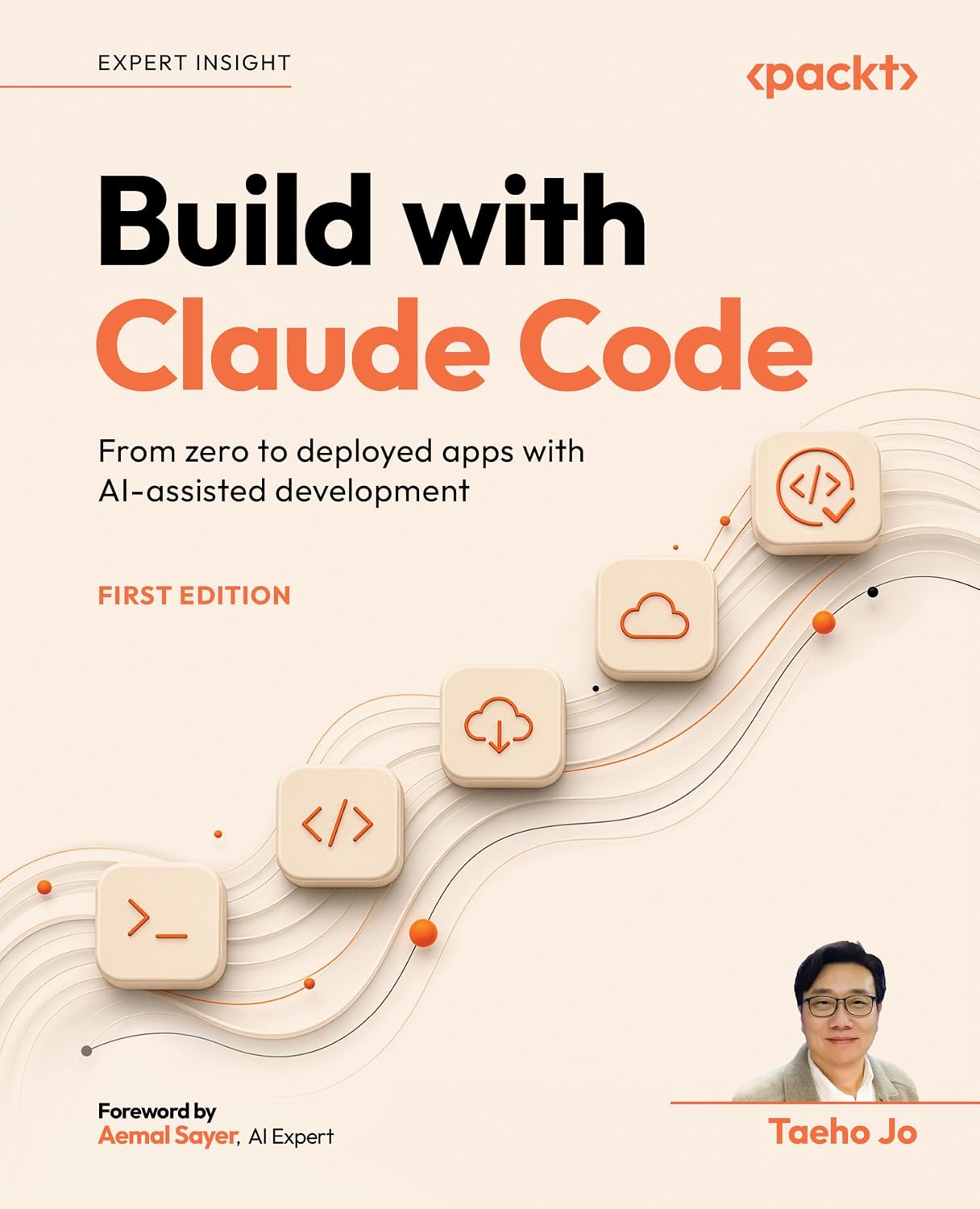
Packt Publishing · Forthcoming
An English edition adapted from Vibe Coding with Claude Code, in preparation for international release with Packt Publishing.
PLATFORMS
236,000+
AI resources indexed and delivered
VibeIndex is not a directory we happen to run. It is the testbed our enterprise work is validated on. Since launching in January 2026 it has indexed 236,000+ AI coding tools, skills, and Model Context Protocol servers, screened 235,000+ of them for security threats, and delivered them to roughly 1,000 users a day, over 200,000 visits and 600,000 page views to date. That traffic tells us which AI tools the world is actually adopting and which are dying, and it is the load under which we test our own open-weight LLM servers for throughput, concurrency, and attack resistance. Every architecture we propose to a client has already run here first.
225,000+
Production requests served by our own LLM technology
We do not resell someone else's model. We build and run our own LLM coding technology on open-weight models, which is what makes an on-premise deployment possible in the first place. We proved it in public under the name VixCode, serving 225,000+ requests while we measured throughput, concurrency, and attack resistance against real traffic. The same stack deploys entirely inside your own infrastructure, so no prompts, no code, and no data leave your network. Architecture documentation, deployment topology, and data-handling policy are available under NDA.
A current-state map of workflows and data, an adoption priority matrix, a phased roadmap. Proposal within two business days.